Have you ever spent hundreds of dollars on a luxury anti-aging serum, applied it carefully every day, and still found that your skin looked tired, dull, and puffy? The serum may not be the problem. Your superficial circulation may simply be "asleep."
That missing movement is exactly where a controlled facial cupping ritual can make the routine feel more active.
That is why controlled facial cupping has become such an interesting category for spas, skincare brands, and beauty retailers. It turns a passive skincare step into an active facial ritual: oil, light suction, slow glide, visible freshness.
A good facial cupping routine is really a controlled micro-glide ritual: gentle facial oil, light negative pressure, smooth movement, and a cup shape that can follow facial curves without harsh pulling.
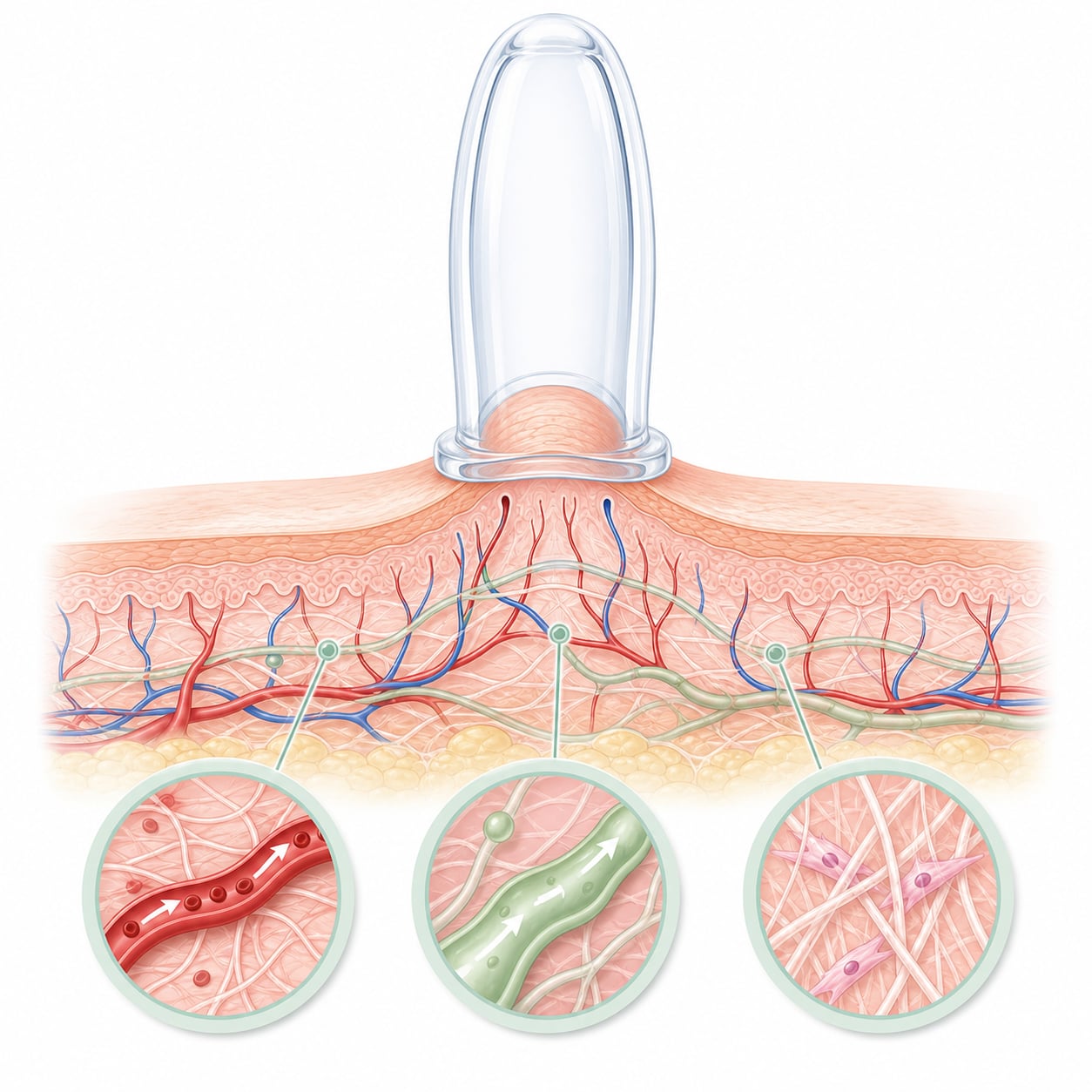
1. First, Wake Up the Look of Tired Skin
Tired-looking skin is not always about poor skincare. Sometimes the face simply looks stagnant: dull tone, morning puffiness, and a heavy-looking jawline.
Controlled facial cupping adds movement. When a soft cup creates a light seal and glides over facial oil, it gently lifts the superficial tissue while the hand guides the cup outward and upward. The result can be a warmer, fresher-looking complexion after a short session.
Think of it as a non-invasive facial yoga moment: not a medical procedure, but an active way to help skin look more awake.
The scientific mechanism: light negative pressure can temporarily increase superficial blood flow and create a mild local flush. This is a short-term circulation response, not a structural skin-renewal claim.
The visual benefit: the face can look warmer, brighter, and less tired, especially after a slow glide over the cheeks, jawline, and neck. Commercially, this is easy to explain: customers like a ritual they can see and feel.
The right promise is not "reverse aging." It is: help tired skin look fresher after a gentle, oil-based gliding massage.
2. Glide Away the Look of Morning Puffiness
Many beauty customers know the "pillow face" problem: late night, salty dinner, long flight, or poor sleep, then a face that looks swollen around the cheeks and jawline.
A controlled facial cup gives them a simple visual routine: apply oil, create a light seal, then glide from the center of the face outward and down the neck with very soft pressure. Used correctly, this can support superficial fluid movement and help the face look less puffy for a limited time.
This is why many users describe the face as feeling lighter and looking a little more defined after a careful glide routine.
The scientific mechanism: facial puffiness is often linked to superficial fluid accumulation. Light suction plus directional glide can act like a gentle external pump, encouraging surface-level fluid movement without relying on vague "detox" language.
The visual benefit: the lower face can look lighter, the jawline can appear cleaner, and the routine gives users a clear sense that morning heaviness is being gently moved rather than simply covered with skincare.
3. Make the Skincare Step Feel More Active
Facial cupping does something a serum alone cannot do: it gives the customer a physical skincare experience.
With enough facial oil or serum, the cup glides smoothly while the skin receives gentle lift-and-release movement. The face can look temporarily plumper and smoother, and the routine feels more intentional than simply rubbing product across the surface.
For people with a tight-feeling jaw or tense lower face, very light directional gliding can also make the routine feel more relaxing and satisfying. That is why facial cupping fits naturally into facial massage, spa treatments, and at-home skincare routines.
What the skin may experience
- Microcirculation: a short facial massage routine may help tired-looking skin appear more awake.
- Superficial fluid movement: light, directional glide may help soften the look of morning puffiness.
- Gentle mechanical stimulation: oil-based massage can leave the skin looking temporarily smoother and more refreshed.
- Controlled glide: the skincare step feels more active and intentional, without needing strong suction.
While the glow is usually immediate, smoother-looking skin is best understood as the result of consistent, gentle use within a broader skincare routine, not as a one-session anti-aging transformation.
4. Why Cup Shape Matters on the Face
The face needs a different cup from the body. It needs a tool that feels easy in the hand, moves smoothly with oil, and helps users stay away from harsh pulling.
This is why the shape and material of a facial cup matter. A slim oval liquid silicone cup is not built to chase aggressive suction. Its real value is that it makes light suction easier to control while the cup moves across smaller facial zones.
Design details that make gentle use easier
- Slim oval body: easier to hold when facial oil makes the hands slippery.
- Rounded pressable top: gives quick hand feedback, so suction can be reduced immediately.
- Narrow suction opening: follows smaller facial areas around the jawline, cheeks, forehead, and neck.
- Transparent liquid silicone: makes it easier to watch how the skin responds during the glide.
- Soft rebound: creates a gentler beauty-tool feel instead of a harsh body-cupping sensation.
These details are easy to overlook, but they change the feel of the routine. The goal is not simply to attach a cup to the face; it is to keep the glide smooth, light, and easy to adjust.
5. A Three-Step Ritual Customers Can Remember
The best beauty tools are easy to teach. ELERA facial cupping can be explained in three simple steps:
- 1. Oil: apply enough facial oil or serum so the cup glides without dragging.
- 2. Press: gently squeeze the rounded top and create a light seal on the skin.
- 3. Glide: move slowly outward along the jawline, cheeks, forehead, and neck.
That simple "oil, press, glide" story makes the product easy for spas to demonstrate, easy for influencers to film, and easy for retail customers to repeat at home.
6. A Softer Alternative to More Aggressive Beauty Tools
Many customers want a visible beauty ritual, but they are cautious about heat, needles, peeling, or expensive devices. Facial cupping gives brands a softer story: hands-on, low-energy, and easy to stop whenever the skin has had enough.
That does not mean every skin type is suitable. People with active irritation, inflamed acne, broken skin, visible capillaries, rosacea-prone flare-ups, or recently treated skin should avoid facial cupping unless cleared by a qualified professional.
But for suitable users, controlled facial cupping offers a compelling middle ground: more active than hand application, softer than aggressive devices, and more tactile than a passive skincare step.
Why Beauty Buyers Like This Category
Facial cupping is easy to bundle with skincare because it creates a richer routine around products customers already use. It pairs naturally with facial oils, serums, gua sha sets, cleansing rituals, and spa facial protocols.
For OEM and private label buyers, it also gives the brand a strong education angle: morning depuffing, pre-event glow, jawline massage, neck glide, and controlled facial pathways. These are visual, social-media-friendly stories that customers can understand quickly.
Conclusion: The Glow Is in the Glide
Facial cupping works best as a beauty ritual, not a miracle claim.
With enough oil, light suction, and slow movement, it can help the face look fresher, less puffy, and more awake. With the right cup design, the routine feels easier to control, easier to teach, and easier to repeat.
This is why a slim oval liquid silicone cup works well for facial routines: stable grip, smooth glide, visible skin response, and a softer beauty-tool feel.
For spas, beauty brands, and skincare retailers, this is the kind of product story that sells: science-aware, visually intuitive, and emotionally easy for customers to want.
Better facial cupping is not about stronger suction. It is about a smoother ritual customers want to come back to.
Professional Safety Notes
For spas and beauty brands, responsible product education should stay consistent with general cupping safety guidance from NCCIH and Cleveland Clinic, rosacea-sensitive skin guidance from the American Academy of Dermatology, and cautious literature around manual lymphatic massage in cosmetic settings.
Build a More Controlled Facial Cupping Experience
Explore ELERA Cupping's medical-grade liquid silicone facial cups, designed for smooth gliding, stable sealing, and professional skincare routines.
Discover Facial Cupping Sets