For thousands of years, traditional cupping therapy has relied on glass cups or bamboo and the application of fire to create a therapeutic vacuum. While effective, this "fire cupping" technique comes with inherent risks, a steep learning curve, and limited flexibility during treatment. Today, an overwhelming number of modern physical therapy clinics, professional spas, and wellness centers are making a massive shift to 100% medical-grade silicone cupping sets.
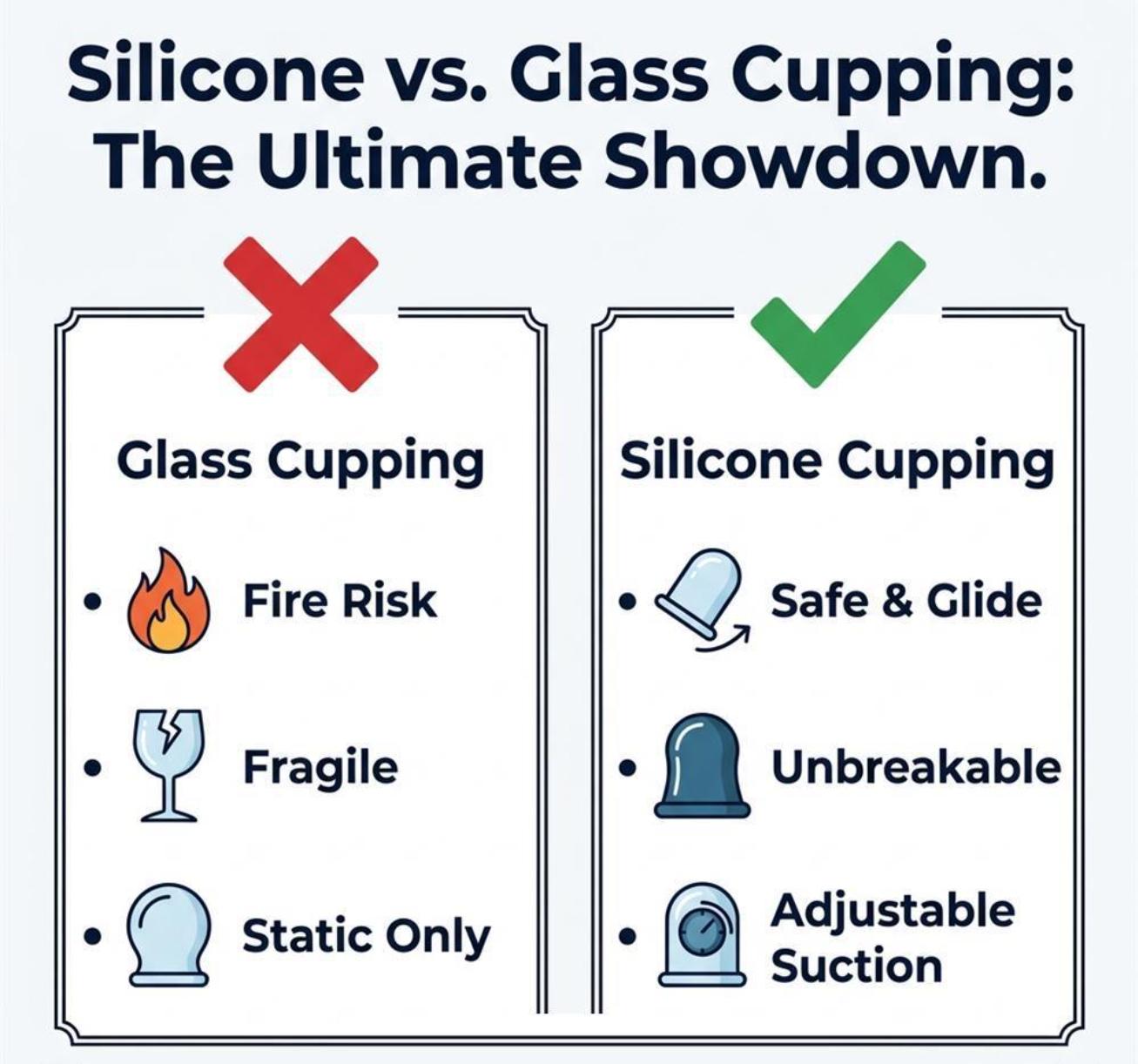
1. Unrivaled Safety: No Fire, No Breaking
The most immediate and obvious difference between silicone and glass cupping is the method of creating suction and the material's durability.
Eliminating Burn Risks
Traditional glass cupping requires a practitioner to ignite an alcohol-soaked cotton ball to consume the oxygen inside the cup and quickly place it on the patient's skin. A slight miscalculation can result in severe patient burns. Silicone cups, on the other hand, generate suction through simple manual compression—completely eliminating fire from the treatment room and massively reducing liability for clinic owners.
100% Unbreakable
Glass cups are fragile. Dropping one on a hard clinic floor mid-treatment means shattered glass, an interrupted session, and a safety hazard. Premium silicone cups are highly resilient and practically indestructible, meaning your clinic's investment lasts indefinitely without the need to constantly replace broken pieces.
2. Dynamic Cupping and Gliding
While glass cups are excellent for static placement, they present challenges when a practitioner wants to perform dynamic or gliding cupping.
"The flexibility of silicone allows the cup to maintain suction even as it glides over bony prominences, joints, and curved musculature—areas where rigid glass simply pops off."
With a light application of massage oil, silicone cups slide seamlessly across the fascia. Their pliable edges contour to the body's natural curvature, allowing physical therapists to perform deep tissue massage and myofascial release on tricky areas like the knees, elbows, shoulders, and the curve of the neck.
3. Adjustable, Practitioner-Controlled Suction
Achieving the perfect level of suction with a glass cup requires precise timing with fire. If the suction is too strong for a sensitive patient, the practitioner must completely remove the cup and try again.
Silicone cups provide variable compression built directly into their design:
- Light Suction: Gently squeeze the top of the cup (perfect for facial cupping and lymphatic drainage).
- Medium Suction: Squeeze the sides of the cup for general myofascial release.
- Deep Suction: Completely compress the cup from the center, creating a profound negative pressure equivalent to strong fire cupping, ideal for athletes and deep tissue therapy.
If the suction is too intense, the practitioner simply squeezes the cup slightly to release a bit of pressure without breaking the seal. This degree of micro-adjustment ensures optimal patient comfort.
4. Easy Hygiene and Sterilization
In a clinical environment, rapid and effective sanitation between patients is paramount. Medical-grade silicone is exceptionally non-porous and resistant to bacteria.
After a treatment, silicone cups can quickly be washed with warm soapy water and disinfected using medical-grade wipes. Unlike plastic cups with cumbersome hand-pumps and valves that can harbor bacteria, ELERA's silicone cups are a single, seamless piece of material. They can even withstand high-heat sterilization in an autoclave, ensuring the highest standards of clinical hygiene.
Conclusion: The Clear Choice for Modern Practice
While traditional glass cupping holds an important place in history, medical-grade silicone brings the modality into the 21st century. By eliminating burn risks, enabling dynamic gliding, providing adjustable suction, and ensuring unbreakable durability, silicone cupping sets drastically improve both the practitioner's workflow and the patient's experience.
Upgrade Your Clinic's Toolkit Today
Equip your practice with ELERA Cupping's premium, FDA-compliant medical-grade silicone sets. Ask about our wholesale pricing for clinics.
Request Wholesale Quote