The Great Anatomical Blunder
For over a century, traditional Western medicine suffered from a colossal blind spot.
When medical students and anatomists dissected human cadavers, they focused entirely on the bones, muscles, and organs. In order to see these structures clearly, they had to cut away a sticky, white, spider-web-like tissue that enveloped everything. For decades, medical textbooks dismissed this tissue as mere "biological packing material"—irrelevant stuffing meant only to hold the important parts together.
They threw it in the trash.
It wasn't until the early 2000s, with the advent of advanced in-vivo (living tissue) imaging, that the medical community realized they had made a massive mistake. That "packing material" was Fascia, and it turned out to be the largest, most sensory-rich, and highly communicative organ system in the entire human body.
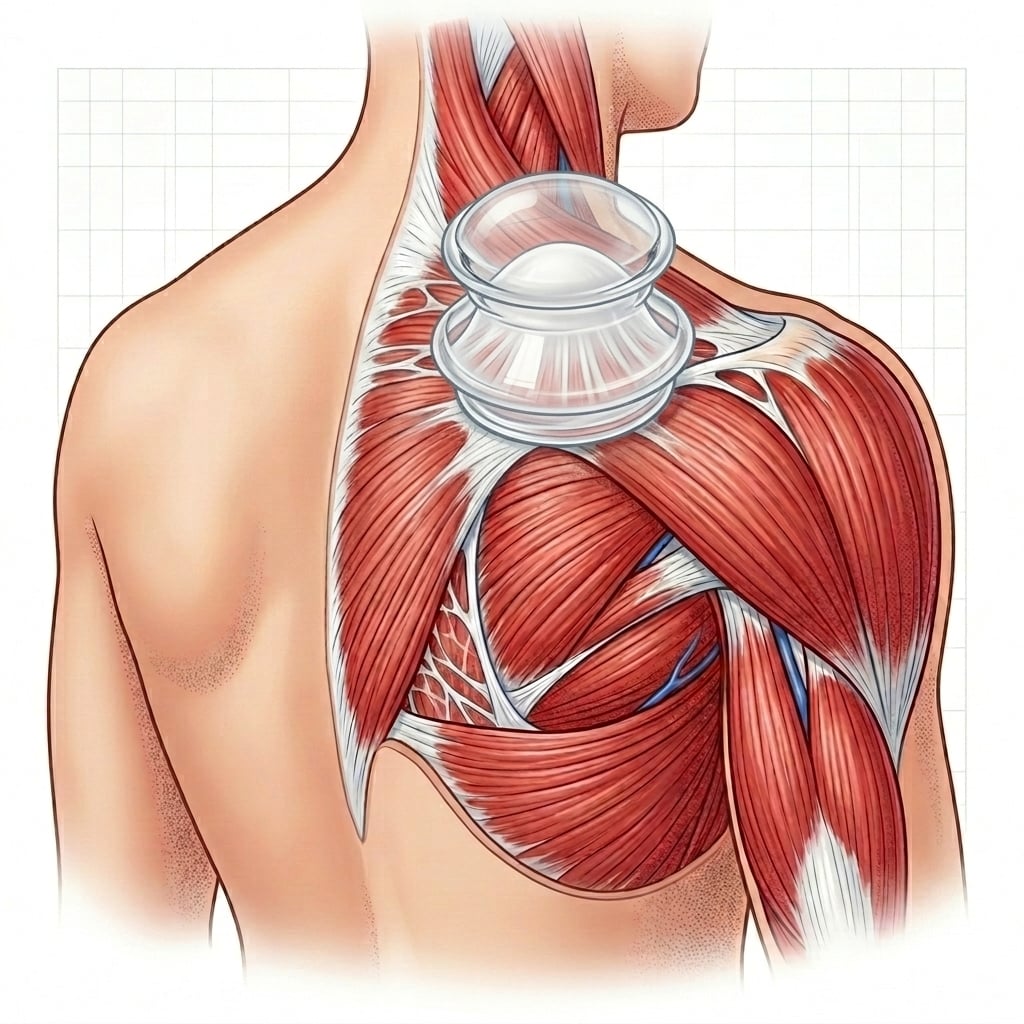
What Actually is Fascia?
Fascia is a continuous, three-dimensional web of connective tissue that wraps around every single muscle fiber, blood vessel, nerve, and organ from your head to your toes.
More importantly, fascia is not a static wrapping paper; it is a dynamic, fluid-filled communication network. It is packed with billions of sensory nerve endings (mechanoreceptors) and proprioceptors. In fact, modern science now recognizes that fascia is our richest sensory organ, processing even more mechanical information than our skin.
When you move smoothly, your fascial layers glide over one another seamlessly, lubricated by hyaluronic acid. But when things go wrong, fascia becomes a physiological nightmare.
The "Biological Straitjacket"
When you experience physical trauma, poor posture, repetitive stress (like staring at a phone), or chronic dehydration, your fascia responds by defending itself. It becomes thick, dehydrated, and sticky.
The layers of fascia adhere to the muscle underneath. Instead of gliding, they bind together, forming dense fascial adhesions or "knots." Imagine wearing a tightly woven wool sweater, and someone grabs a handful of the fabric and twists it into a tight knot. If you try to lift your arm, the restriction pulls across your entire back.
This is exactly what happens inside your body. A fascial adhesion in your lower back can pull on the entire fascial net, causing mysterious pain in your neck or shoulders.
This is why traditional doctors, who only look at X-rays of bones, often cannot find the source of chronic pain. You cannot see dehydrated fascia on a standard X-ray.
The Flaw of Traditional Massage (Compression)
When we feel pain from bound fascia, our instinct is to push on it. Traditional physical therapy and deep tissue massage rely heavily on compression—pushing downward into the tissue.
While massage is incredibly valuable, if your fascial layers are glued together like melted plastic, pushing down on them only squishes the glued layers deeper against the bone. It often fails to un-stick the layers, and in some cases of severe inflammation, heavy downward pressure can trigger a protective pain response, making the muscle guard and tighten further.
The Solution: Myofascial Decompression (Cupping)
If compression cannot untangle the biological straitjacket, what can? Decompression.
This is the brilliant biomechanical secret behind Cupping Therapy, clinically referred to as Myofascial Decompression (MFD).
Instead of pushing down, cupping reverses the mechanical vector. When a silicone cup is applied to the skin, the vacuum effect pulls the tissue upward.
This upward lift achieves what hands cannot:
- Vertical Separation: The negative pressure physically lifts the superficial fascial layer away from the underlying muscle. It literally pulls the "glued" layers apart.
- Rehydration: By creating a microscopic vacuum space between the tissues, interstitial fluid and fresh, oxygenated blood rush into the dehydrated area. This re-lubricates the fascia, restoring its ability to glide.
- Nervous System Reset: The novel upward stretch stimulates the mechanoreceptors embedded in the fascia, sending a signal to the central nervous system to shut off the chronic pain loop and relax the muscle.
The ELERACUPPING Standard
To properly separate fascia without causing capillary rupture or extreme pain, the tool must be precise and forgiving. Rigid glass or hard plastic cups lack the dynamic flexibility required to glide along the body's natural fascial lines.
This is why leading physical therapists have transitioned to Medical-Grade Platinum Silicone Cupping Sets. Silicone cups, like the ELERACUPPING Professional Mushroom Series, allow the practitioner to easily squeeze and modulate the suction strength, adapting perfectly to the unique fascial tension of every patient.
For 100 years, modern medicine ignored the fascial net. Today, we know that healing the fascia is the key to unlocking chronic pain. And Myofascial Decompression is the key to unlocking the fascia.
Advance Your Clinical Practice
Equip your clinic with the highest standard of myofascial decompression tools. Explore ELERACUPPING's 100% Medical-Grade Platinum Silicone Sets designed for professional efficacy.
Partner With Us