If you have ever seen traditional cupping marks on an athlete's back, facial cupping may sound intimidating. But the face is a completely different territory. Facial cupping is not about leaving dark circles or forcing the skin upward with aggressive suction. It is a lighter, more precise ritual built around continuous movement, facial oil, and controlled negative pressure.
The real secret of facial cupping is not "more suction." It is better control: a cup that seals easily, glides smoothly, and responds instantly to the pressure of your hand.
For beauty brands, spas, and at-home skincare users, this is where tool design becomes critical.
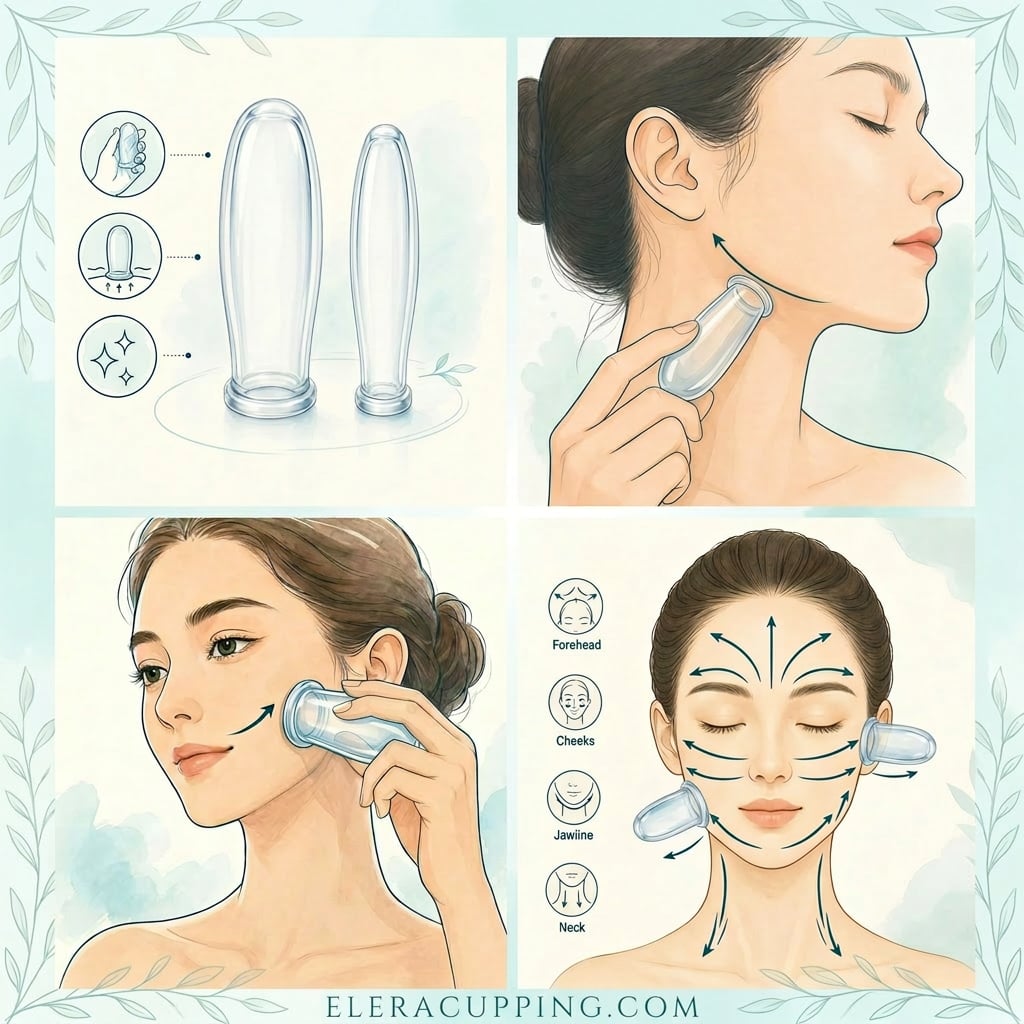
1. Why Facial Cupping Is a Different Language
Body cupping often works on large muscle groups such as the back, shoulders, or thighs. The face is more delicate. The skin is thinner, the curves are sharper, and areas like the jawline, cheekbones, temples, and neck require much finer control.
This is why facial cupping should be performed with light suction and continuous gliding. A facial cup is usually moved outward and upward across the skin, never left sitting in one spot for too long. When used correctly, the experience should feel like a lifting massage rather than a static cupping session.
The goal is simple: support circulation, encourage a refreshed-looking complexion, and help release the feeling of facial tension without overwhelming the skin.
2. The Cone-Cup Problem: Grip, Seal, and Over-Squeezing
Many basic facial cups use a cone-shaped design. They are simple, but not always ideal for precision work.
A cone cup can be harder to grip once facial oil is applied. It may also require stronger squeezing to create a noticeable seal. For beginners, that often leads to one of two problems: either the cup keeps losing contact, or the user presses too hard and creates unnecessary pulling.
On the face, both problems matter.
If the seal is unstable, the massage feels interrupted. If the suction is too aggressive, the skin may become irritated or marked. A good facial cup should help users stay in the middle zone: enough vacuum to glide with purpose, but not so much that the skin feels strained.
3. Why a Slim Oval Silicone Cup Feels More Controlled
A slim oval facial cup solves this problem through shape.
The elongated body gives the fingers a natural gripping surface. The rounded top can be compressed easily, while the narrower circular opening helps the cup follow smaller facial zones more precisely. Around the jawline, under the chin, along the cheek contour, and down the neck, this shape feels more like a skincare massage tool than a medical cup.
Compared with many ordinary cone-shaped cups, a well-designed oval silicone cup can create a more efficient vacuum response with less hand force. That means users do not need to over-squeeze to feel the cup engage.
The Result Is a Smoother Routine
- Easier grip during oil-based massage
- Faster suction response
- More stable sealing on curved facial areas
- Better control around the jawline and neck
- Less hand fatigue during repeated strokes
- A more refined spa-like feeling for daily skincare
4. The Non-Negotiable Material: Medical-Grade Liquid Silicone
Because facial tools sit directly on delicate skin, material quality is not cosmetic. It is functional.
Medical-grade liquid silicone gives a facial cup the right balance of softness, transparency, durability, and rebound. It should be flexible enough to squeeze, but stable enough to return to its shape immediately. It should feel smooth against the skin, not sticky, cloudy, or thin.
For professional beauty use, this matters even more. A high-quality liquid silicone cup is easy to clean, resistant to repeated use, and comfortable for clients with different facial contours.
Transparency is also useful. A clear cup allows users or practitioners to observe how the skin is responding during the glide, making it easier to adjust pressure before the suction becomes too strong.
5. The 5-Minute Facial Gliding Pathway
A simple facial cupping routine does not need to be complicated.
Start with clean skin and apply a generous layer of facial oil or serum. Never use a facial cup on dry skin. Lightly squeeze the cup, place it on the skin, release to create gentle suction, and begin moving immediately.
Common Pathways
- From the chin outward along the jawline
- From the corners of the mouth toward the ears
- From the nose outward across the cheeks
- From the center of the forehead toward the temples
- Down the sides of the neck with very light suction
The movement should be slow, smooth, and continuous. If the pull feels sharp, reduce the suction. Facial cupping should feel controlled, never painful.
6. Safety: The Beauty Tool Still Needs Respect
Facial cupping is gentle when used properly, but suction is still a real mechanical force. Overuse, dry dragging, or leaving the cup in one place may cause temporary marks, irritation, or broken capillaries.
Avoid facial cupping over active inflammation, broken skin, sunburn, recent cosmetic injections, fresh laser treatments, or irritated acne. Users with very sensitive skin, rosacea, eczema, psoriasis, blood clotting concerns, or other medical conditions should ask a qualified professional before trying cupping.
The best rule is simple: lighter suction, more glide, less time.
Conclusion: Better Facial Cupping Starts With Better Control
Facial cupping is not a contest of suction strength. It is a skincare massage technique that depends on control, material quality, and cup geometry.
A slim oval facial cup made from medical-grade liquid silicone gives users a more precise way to work around the natural curves of the face. It grips easily, seals efficiently, glides smoothly, and allows pressure to be adjusted by hand in real time.
For spas, beauty brands, and skincare routines, that difference is what turns facial cupping from a trend into a refined daily ritual.
Build a Better Facial Cupping Experience
Explore ELERA Cupping's medical-grade liquid silicone facial cups, designed for controlled suction, smooth gliding, and professional skincare routines.
Discover Facial Cupping Sets